

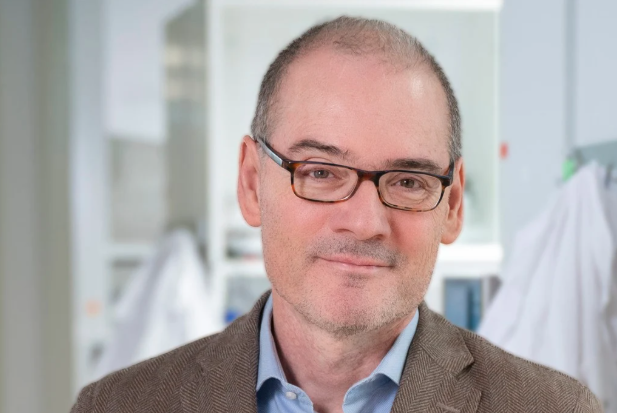
Dr. George Coukos, an internationally renowned expert on cancer immunology, is on a mission to rapidly translate tumor biology research into personalized, cell-based therapies for patients with some of the hardest-to-treat cancers. A new laboratory, part of an innovative collaboration between Weill Cornell Medicine and the Ludwig Institute for Cancer Research, seeks to do just that.
Dr. Coukos, who served as the founding director of the Ludwig Lausanne Branch in Switzerland for the past 10 years, will launch the Ludwig Laboratory for Cell Therapy at Weill Cornell Medicine, housed within the Sandra and Edward Meyer Cancer Center. In this new role, he will fully leverage the expertise and clinical research capacity at Weill Cornell Medicine to achieve the two organizations’ shared goal of improving patients’ clinical outcomes.
“I am very excited about the opportunity to join the Weill Cornell faculty,” said Dr. Coukos, who was recruited to Weill Cornell as a professor of immunology in medicine with a secondary faculty appointment in the Department of Pathology and Laboratory Medicine. “It is an exceptional place that offers unique opportunities for discovery and clinical translation.”
“The establishment of this laboratory is a testament to the long-standing commitment of the Ludwig Institute to Weill Cornell Medicine and vice versa,” he added. “This collaboration will go a long way to enable us to really make an impact.”
In addition to running the laboratory, Dr. Coukos will serve as associate director for cell therapy at the Meyer Cancer Center and as associate director of precision cell immunotherapy at the Englander Institute for Precision Medicine.
A leader in his field, Dr. Coukos has a lauded history of translating scientific discovery into innovative new therapies. He began his career studying ovarian cancer at the University of Pennsylvania. His discovery of the role of the immune response in ovarian cancer outcomes helped him develop innovative therapies that leverage the immune system to treat this deadly form of cancer. He has also made key discoveries regarding how tumors can suppress the activity of tumor-killing immune cells, called T-cells. He has tested ways to combat that immune suppression using innovative vaccines that deliver immune cells called dendritic cells into the tumor to help T-cells find and destroy tumor cells.
Since then, he has continued to study immune suppression in solid tumors and designed therapies that restore the immune system’s ability to respond. That work will continue at Weill Cornell Medicine, where he hopes to accelerate translational research by rapidly converting new insights on tumor immunology into T-cell therapies derived from patients’ immune cells. To develop these personalized therapies, T-cells are harvested from the patient’s body, engineered to attack the patient’s tumors and multiplied in the lab before being administered to the patient as a treatment.
We spoke with Dr. Coukos to learn more about his new role and how he hopes to help develop improved cancer therapies for patients.
What will be the focus of the Ludwig Laboratory for Cell Therapy at the Meyer Cancer Center?
We will be developing next-generation personalized T-cell therapies for patients with cancer, taking advantage of a convergence of emerging technologies. These technologies, including gene and cell engineering and synthetic biology, have the potential to create new solutions to biological challenges. We will also use artificial intelligence to accelerate the creation of T-cells with new capabilities using synthetic biology, interpret and read the tumor microenvironment, and further interrogate the biology of the tumors.
Can you tell me more about the types of therapies you hope to create?
We want to create advanced T-cell therapies that are more potent and effective at treating solid tumors and other types of tumors where existing T-cell therapies have fallen short. We are extremely focused on clinical translation. In addition to scientific and technological innovation, we are very determined to generate technologies that can be applied to patients to change lives. We aim to test these technologies in the clinic and create a translational program that will go all the way from early laboratory investigation to clinical trials.
How will being embedded at Weill Cornell Medicine facilitate these goals?
There is a very rich scientific community at Weill Cornell Medicine with key expertise across the areas of immunology, cancer biology, inflammation, microbiome, metabolism, computational science, genetics, gene therapy and clinical translation. This community is housed within the larger innovation ecosystem at Weill Cornell, which includes the Weill Cancer Hub East. The scientific and clinical trials expertise and infrastructure at the Meyer Cancer Center and Englander Institute for Precision Medicine will also be vital to establishing a successful translational program.
How does this new laboratory continue the Ludwig Institute's decades of work in cancer immunotherapy?
This laboratory really builds on the Ludwig Institute’s decades-long investment in cancer immunotherapy, including the critical foundational research we did at the Ludwig Lausanne Branch. Over the past decade in Lausanne, we have developed deep expertise in tumor immunology, the tumor immune microenvironment and cell-based therapies. Now, by combining the Ludwig Institute's support with the translational and clinical resources at Weill Cornell Medicine, we’re aiming to develop the next generation of rationally engineered personalized T-cell therapies for patients with hard-to-treat cancers.
Can you share some examples of how your translational work has led to new cancer therapies?
When I was at the University of Pennsylvania, we developed cell-based immunotherapies targeting ovarian cancer. We launched clinical trials testing therapies combining dendritic cell vaccines and T-cell therapies. Then, I moved to Lausanne, where I spent the last 14 years working on developing translational T-cell therapies. We developed several technologies and brought them to the clinic to treat patients with melanoma, lung cancer and other tumor types. Now, I’ll continue that work at Weill Cornell Medicine. We will focus on tumor types that have the greatest therapeutic need.
How will your work impact patient care?
Our mission is to provide clinicians novel opportunities to offer patients innovative therapies through clinical trials. The focus will be on difficult-to-treat tumors, for which no curative options exist today. The clinical teams at Weill Cornell Medicine are outstanding. I will bring my expertise in immunology and tumor biology, and my translational experience, to help apply experimental T-cell therapies most effectively.
Will you have a role in helping train future immunotherapy and cell therapy experts?
Training the next generation of translational scientists and clinicians is a very important priority for me. One of our goals will be making sure that they are inspired and well-trained to take over and advance this critical work.
Is this a key moment for personalized cancer therapies?
We are really at an inflection point where we have lots of new enabling technologies to help us in our mission. A consecutive series of breakthroughs—the development of synthetic biology, AI-assisted gene and protein engineering, CRISPR gene editing, advances in our ability to genetically engineer human immune cells outside the body and even inside the body—have all made this work possible. There is a growing toolbox available that allows translational scientists to think creatively and provide solutions to specific problems, now better understood at a molecular and cellular level.
Indeed, there is also a growing understanding of tumor biology and why the immune system succeeds or fails at controlling tumors. Those advances have been facilitated by artificial intelligence and investigative tools like single-cell genomic sequencing and spatial-omics, which allows us to develop detailed maps of the tumor microenvironment. The convergence of that expanding toolbox, advances in tumor biology research, and knowledge of how to fix the immune response has created an ever-expanding series of opportunities to develop new therapies.