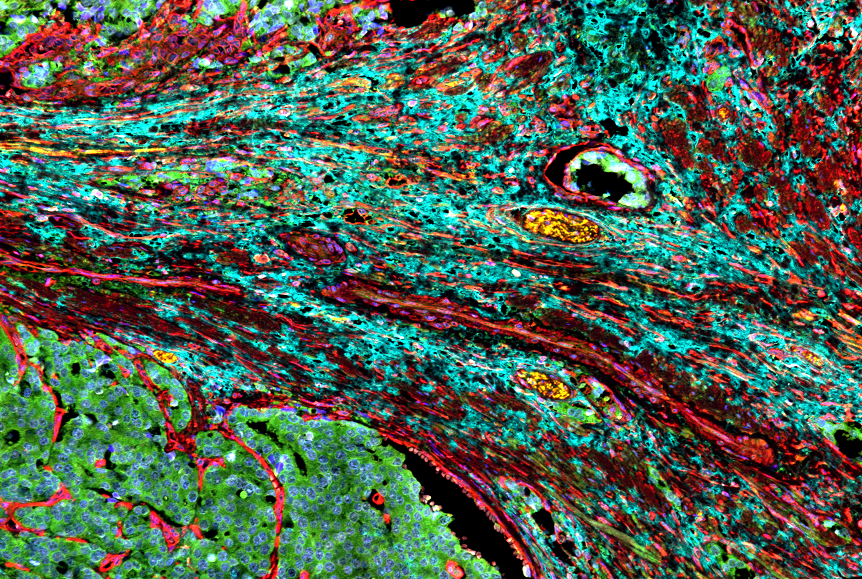
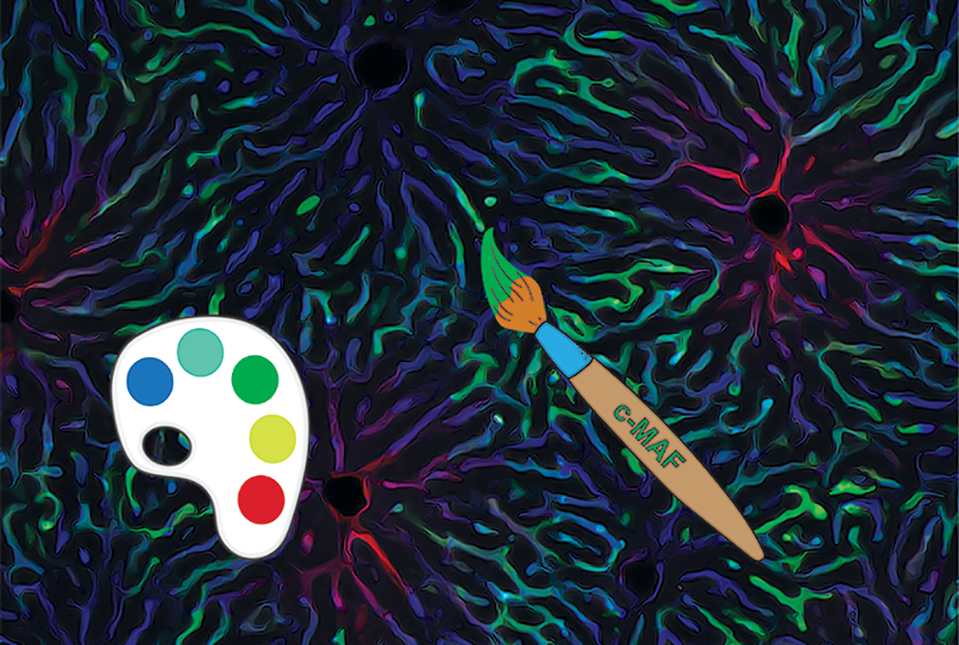
Human pluripotent stem cell-derived alveolar organoid xenograft. Red: Pro-SP-B (an Alveolar Type 2 cell marker) and Green: ACE2 (a receptor of SARS-CoV-2). Image courtesy of Dr. Shuibing Chen.
Human organoids, tiny organ-like structures grown in...
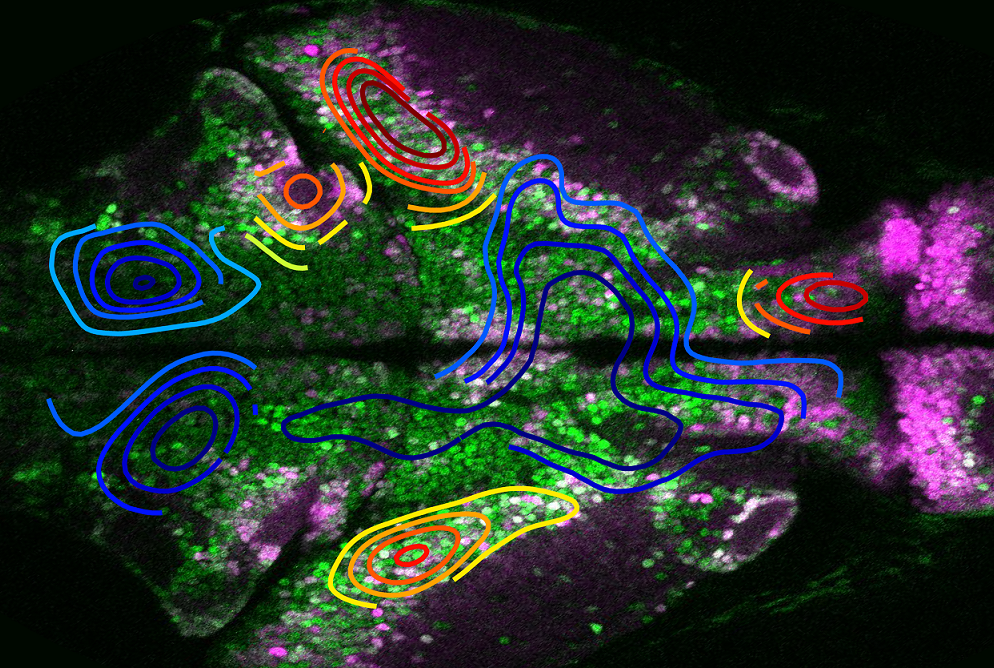
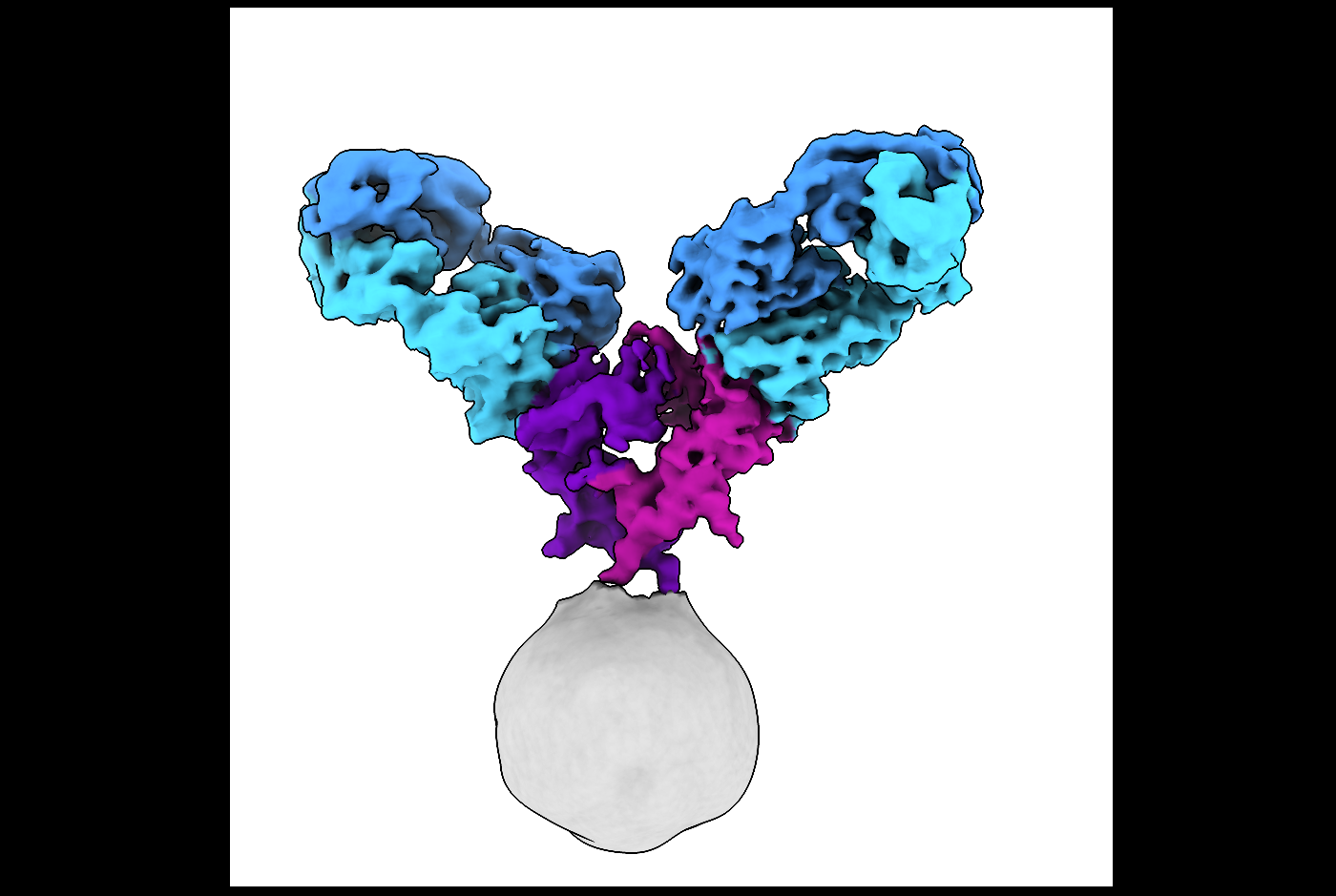
The image illustrates three distinct structures uncovered across thousands of cancer genomes: a rift (rigma) in the wall, recurrent towers (pyrgo), and a dramatic tornado (typhoon) shape a complex and turbulent landscape. Illustration by Dijon Strauss
The amount of SARS-CoV-2 virus, or “viral load,” in cancer patients and in the general inpatient population upon hospital admission may predict their risk of dying of the infection, according to a study led by researchers at Weill Cornell Medicine and NewYork-Presbyterian. The findings provide new insights into the relationship between viral load and the risk of severe illness in both populations and may help guide treatment decisions.
The COVID-19 pandemic will potentially lead to greater disparities in cancer care and outcomes among Black and Hispanic New Yorkers, according to a viewpoint article published in JAMA Oncology on Aug. 13 by Weill Cornell Medicine and NewYork-Presbyterian investigators. The authors write that higher rates of SARS-CoV-2 infection among Blacks and Hispanics will lead to delays...
A study by investigators at Weill Cornell Medicine and NewYork-Presbyterian aims to answer one of COVID-19’s biggest mysteries: why do some people become severely ill, while others have no symptoms? The multidisciplinary team will seek to identify underlying genetic and immune factors that contribute to these varying outcomes to help guide the development of precision prevention and treatment efforts.
With the need for wide scale COVID-19 testing to allow societies reopen safely, a group from Weill Cornell Medicine and other academic medical centers and research organizations have announced the launch of a global competition for low-cost, high-quality and scalable COVID-19 tests, called the COVID-19 XPRIZE, in a ...
Weill Cornell Medicine has awarded eight grants of $100,000 each to faculty for a variety of research projects on COVID-19, funded by the institution’s Board of Overseers and additional donors. The grants will support studies aimed at understanding fundamental aspects of the disease, the body’s immune response and social determinants of health that affect COVID-19 outcomes...
Weill Cornell Medicine investigators have received a total of $3.5 million from the Patient-Centered Outcomes Research Institute (PCORI) to study the effectiveness of telehealth services during the COVID-19 pandemic, and to develop models that can aid in clinical decision making in the treatment of the virus.
Two papers from Weill Cornell Medicine and NewYork-Presbyterian investigators make recommendations on addressing health disparities related to COVID-19 and broader social factors that impact patient health.
Disparities in Broadband Internet Access Highlighted by COVID-19 a Public Health Issue
Disparities in access to reliable broadband internet during the COVID-19 pandemic reflect a broader public health issue, according to an ...
Illustration of breast cancer cells. Credit: Shutterstock
A preclinical model of a common type of breast cancer provides new insight into why an immunotherapy known as checkpoint inhibition has not yet been effective against the...
The risks of stroke and heart failure in an individual increase as the number of social determinants of health increase, according to two new studies by Weill Cornell Medicine investigators. The social factors that affect health include race, education level, annual household income and neighborhood poverty.
The conditions in which people are born, live, learn, work, play, worship, and age, referred to in the studies as social determinants of health or...
The greatly increased risk of cancer and cancer mortality with aging may be due in part to the buildup in the body of a key cancer-promoting molecule, according to new preclinical research from...
The prevalence of SARS-CoV-2 in the United States population this spring may have been 80 times greater than official reports, according to the estimates of a study published June 22 in Science Translational Medicine. The investigators used influenza-like illness (ILI) outpatient surveillance data from the U.S. Centers for Disease Control and Prevention and the New...
Each year, 80,000 people in the United States are newly diagnosed with bladder cancer, and more than 17,000 lose their lives due to the disease. It ranks as the fourth most common type...
A veteran primary care physician, internist Dr. Fred Pelzman can count on one hand the times he’s stayed home sick in his quarter-century career. But they pale in comparison to his most recent illness—a bout of COVID-19 that laid him low for nearly two weeks in mid-March, just as the pandemic was escalating in New York City. Dr. Pelzman—the medical director of Weill Cornell Internal Medicine Associates, an associate professor of...
Tiny packets called extracellular vesicles and particles (EVPs), released by cancer and immune cells, contain specific proteins that may serve as reliable biomarkers for diagnosing...